
Toyota’s next Century to bring ICE power
Toyota has confirmed its next Century luxury vehicle will not be all-electric and will instead employ a powertrain comprising an internal combustion engine (ICE), but the number of cylinders is yet to be decided.
Ahead of a global expansion of the Japanese premium auto brand, which has been Toyota’s flagship ‘VIP’ marque since its 1967 introduction in Japan, the company told Australian media including CarExpert its powertrain is yet to be locked in after it showed a fresh concept car at the Japan Mobility Show (JMS) in Tokyo in October.
“We have not actually decided which kind of engine will be installed,” said Toyota powertrain president Takashi Uehara.
While he did not reveal any additional details, when asked to confirm whether the new Century model will be an ICE vehicle, as opposed to being a battery-electric vehicle (EV), Mr Uehara said: “Yes, it will have an engine.”
CarExpert can save you thousands on a new car. Click here to get a great deal.
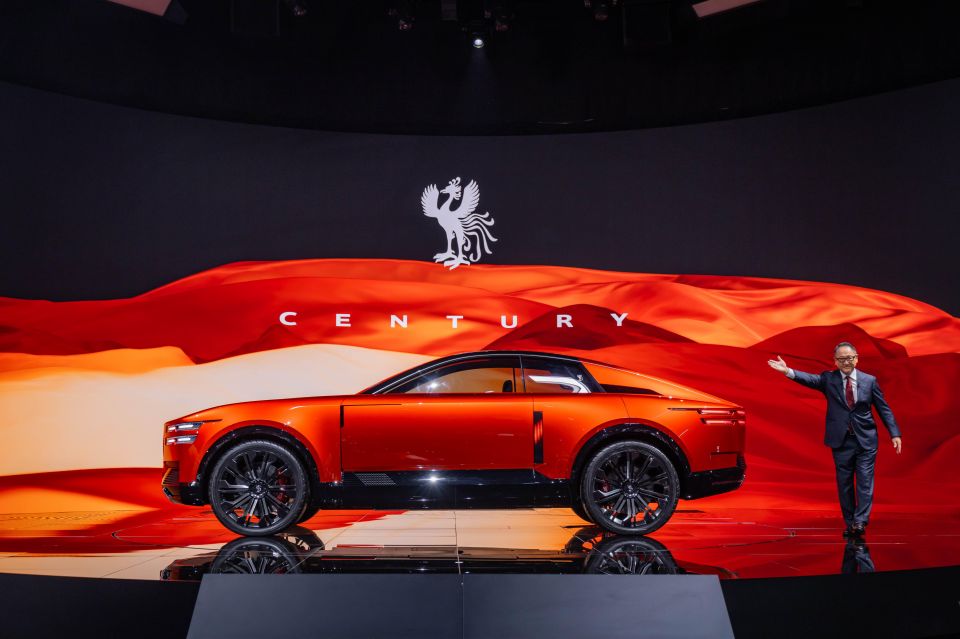
This could include a version of the V8 engine that Mr Uehara told CarExpert will be used in the next-generation Lexus supercar and the upcoming Toyota GR GT performance flagship, the latter of which is set to be revealed later this week, though it’s not clear whether it will be applied on its own or as part of a new V8 petrol-electric hybrid system.
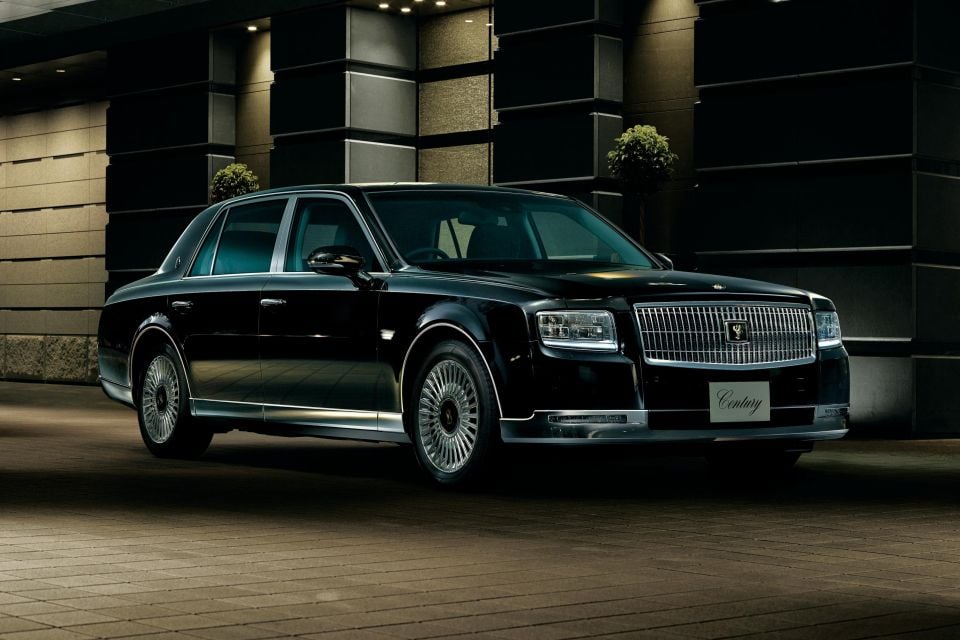
The Century sedan has been the only Toyota in the automaker’s history with a V12 engine, with the second-generation (1997-2017) limousine featuring a 5.0-litre petrol V12 codenamed ‘1GZ-FE’, a compressed natural gas-powered version of which was also offered in Japan.
The V12 was replaced by the 2UR-FSE petrol V8-based hybrid powertrain for the third-generation Century sedan in 2018, incorporating the same engine as seen in the Lexus LS600h sold in Australia between 2004 and 2012.
The V8 was taken from the same family of Toyota/Lexus V8 engines that powered models including the Lexus IS F sports sedan (below) sold here between 2007 and 2014, and the related RC F coupe offered in Australia over 2016-2021.

It is also used in the larger Lexus LC500 sports car lineup sold here, and LS500 sedan offered overseas – though production of final-edition versions of both models will reportedly not continue into 2026.
Century introduced its first SUV in 2023 and it’s currently on sale in Japan with a 3.5-litre petrol V6-based plug-in hybrid system, alongside the V8-powered Century sedan.
As part of its ‘multi-pathway’ powertrain strategy, Toyota has developed a new generation of ICE engines designed for various global applications.
Toyota’s new ICE family features a modular design, meaning the number of cylinders can be changed to suit specific models, while the engines can be mounted transversely or longitudinally for front-, all- and rear-wheel drive layouts.
“There are many combinations available,” said Mr Uehara.
“Now, the time needed for development is very much reduced, so it will be soon, actually.”
Century was announced in October as one of Toyota Motor Corporation’s five global brands, which in addition to Toyota includes Daihatsu, GR Sport, Lexus and Century.
Lexus Australia told CarExpert at the JMS that the Century brand was being evaluated for Australian introduction, but is yet to be locked in for this market.

As part of its global expansion, Century will be offered through Lexus dealerships, not stand-alone showrooms.
There has been no confirmation of when the first truly global Century model will be introduced, nor where it will be sold around the world.
Separately, Toyota Australia has also confirmed that small-car and commercial brand Daihatsu, which was last sold here in 2006, is not on the cards for a return to Australia in the short term.
Source link

